
Description
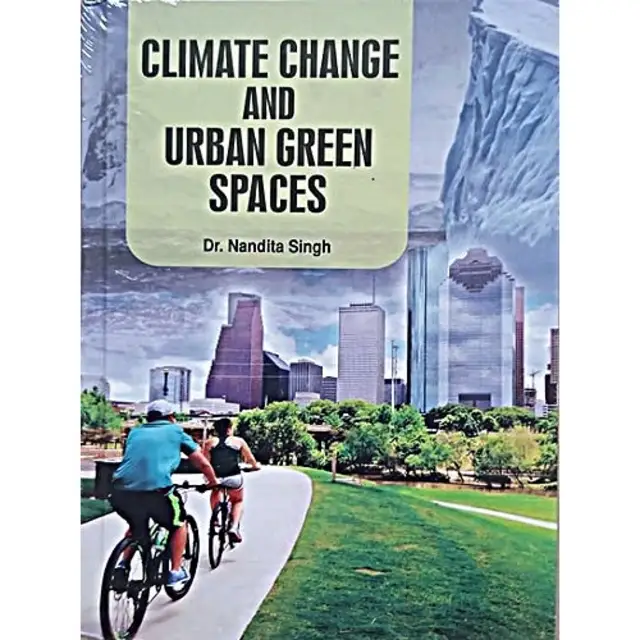
Climate Change And Urban Green Spaces By Nandita Singh. 1/e. 2020. Hardcover
Climate change is one of the most significant global challenges facing the world today. It is also a critical issue for the world’s cities. Now home to over half the world’s population, urban areas are significant sources of greenhouse gas emissions and are vulnerable to the impacts of climate change. Urban green spaces (UGS) contribute to mitigate climate change impacts via carbon sequestration and offer several co-benefits in cities. This contribution, however, is omitted in most national and regional carbon stock estimates, and related literature in the global south is- at best-fragmentary. Every urban landscape is significantly different from any other environment. These urban landscapes having green spaces decreased are mainly made of artificial surfaces which have unique physical attributes unlike any other landscape surface. 1he Combination of dominant artificial surfaces and decreased vegetation creates an urban climate which influences the air quality, outdoor thermal and human comfort. Although, half of the Earth’s population live in cities, the importance of urban air quality and climate issues do not have a high impact on urban planning processes despite the fact that urban weather and climate is essential for human well-being. Many cities are beginning to look to the ecological benefits of green and open spaces as a response to climate change “Linear parks” in particular are taking center stage, as they can often be constructed on unused channels of land like abandoned rail liSor the swaths of green that run below power lines. These green spaces often feature networked bike and walking trails, improving the commuting experience for many while reducing emissions and the urban population’s reliance on fossil fuels. This book will enable students to understand the potential and limits of addressing climate change at the urban level and to explore the consequences for our future cities. It will be essential reading for undergraduate students across the disciplines of geography, politics, sociology, urban studies, planning and science and technology studies.
Contents:
1. Modelling Climate Change
2. Nature of Earth Science in Climate Change, 3. Components of the Global Climate System 4. GreenEcosystem and Climate
5. Planning and Management of Urban Green Spaces
6. Urban Atmosphere and Green Climate Belts
7. Trees in the Urban Environment
8. Climate Change Mitigation and Forest Green Space Development.
Dr. Nandita Singh is an Assistant Professor in department of Geography, ShriVarshney College, Aligarh ofDr. B. R. Ambedkar University, Agra. She is Genius scholar of Govt. Mahakoshal Autonomous Arts& Commerce College, Rani Durgavati Vishwavidyalaya, Jabalpur, (M.P). She obtained her Ph.Ddegree from Dr. HariSingh Gaur University, Sagar (M.P). She has valuable contribution in different branches of geography Vz, Geomorphology, Environmental Management, Remote Sensing & G.I.S., Climatology& Specialization in medical geography and engaged in research work. Dr. Nandita Singh teaching geography to Post-Graduate students with advanced techniques. She has contributed numbers of research papers in the different field of geography In Journals of National &International repute.