
Description
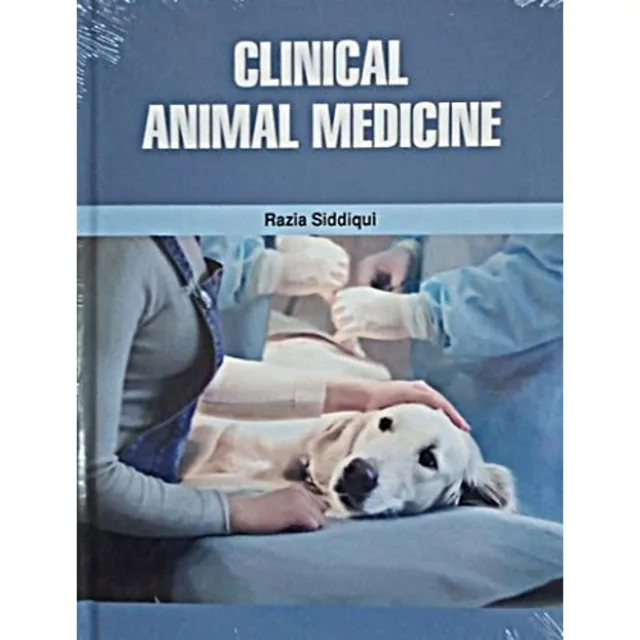
Clinical Animal Medicine By Razia Siddiqui. 1/e. 2021 – Hardcover
In veterinary medicine, clinical manifestations are the most reliable tool for Lyme diagnosis. In human the Current diagnosis is based mainly an a patient’s clinical examination coupled to a two-step serology Animals benefit from biomedical research, as medical research carried out on animals leads directly to veterinary treatments. Vaccines now exist for fatal diseases such as feline leukaemia and canine distemper.
Advances in veterinary medicine have helped to reduce the loss af farm and herd animals to sickness and disease, saving livelihoods all over the world. Vaccines and veterinary medicines are also used in Conservation projects, helping protect endangered species by reducing the risk of disease. Animal testing and animal experiments are also crucial for animal health and the progress veterinary discoveries.
In clinical veterinary medicine, the value of serodiagnostic testing to detect antibody levels has been described in horses, dogs, and birds. Veterinarians are doctors trained to protect the health of both animals and people. In a cinical hospital environment, veterinarñans work with large and small animals to evaluate animals health diagnose and treat ilnesses, provide routine preventive care; prescribe medication, and perform surgery.b Some veterinarians specialize in areas such as surgery, internal medicine, ophthalmology or dentistry.
Veterinary medicine is widely practiced,both with and without professional supervision. Progessional care is most often led by a veterinary physician (also known as a vet, veterinary surgeon or veterinarian), but also by paraveterinary workers Such as veterinary nurses or technicians.This can be augmented by other paraprofessionals with specific specialisms such as animal physiotherapy or dentistry and species relevant roles such as farriers. The book includes information on topics ranging from genetics and behavior to husbandry and techniques in mice, rats, gerbils, hamsters. guinea pigs, chinchilas, rabbis, ferrets ,and nonhuman primates
Advances in veterinary medicine have helped to reduce the loss af farm and herd animals to sickness and disease, saving livelihoods all over the world. Vaccines and veterinary medicines are also used in Conservation projects, helping protect endangered species by reducing the risk of disease. Animal testing and animal experiments are also crucial for animal health and the progress veterinary discoveries.
In clinical veterinary medicine, the value of serodiagnostic testing to detect antibody levels has been described in horses, dogs, and birds. Veterinarians are doctors trained to protect the health of both animals and people. In a cinical hospital environment, veterinarñans work with large and small animals to evaluate animals health diagnose and treat ilnesses, provide routine preventive care; prescribe medication, and perform surgery.b Some veterinarians specialize in areas such as surgery, internal medicine, ophthalmology or dentistry.
Veterinary medicine is widely practiced,both with and without professional supervision. Progessional care is most often led by a veterinary physician (also known as a vet, veterinary surgeon or veterinarian), but also by paraveterinary workers Such as veterinary nurses or technicians.This can be augmented by other paraprofessionals with specific specialisms such as animal physiotherapy or dentistry and species relevant roles such as farriers. The book includes information on topics ranging from genetics and behavior to husbandry and techniques in mice, rats, gerbils, hamsters. guinea pigs, chinchilas, rabbis, ferrets ,and nonhuman primates
Contents:1.Cinical Medicine for Veterinary.2. Uinary Disease and Principles of Therapyx 3. Animal mfection and Treatment, 4. AnimalsCare, 5. Common Paisoningsin eterinary.6. PredicingDrug-drugInteractions,7.Blood Componentsin Veterinary8. DiagnosticTests, 9. Paihogensto Animals
About the Author
Razia Siddiqui is working as an Assistant Professor in the Departmentof Medi Microbiology SGRRIMHS,College of Paramedical Sciences,Shi Guru Ram Rail University Her area of specialisasion is bacteriologyas she has worked an Bacteriological Proflie of solates from pus in burn patients in a Tertiary Care Hospital in SMIH SGRRIM&HS. She has considerable teaching experience of UG dasses. She has also Worked as Organising secretaryof National Webinar in Shri Guru Ram Rai University She has been actively garticipating in research as she has attended various National and intemational conferences and presented papers